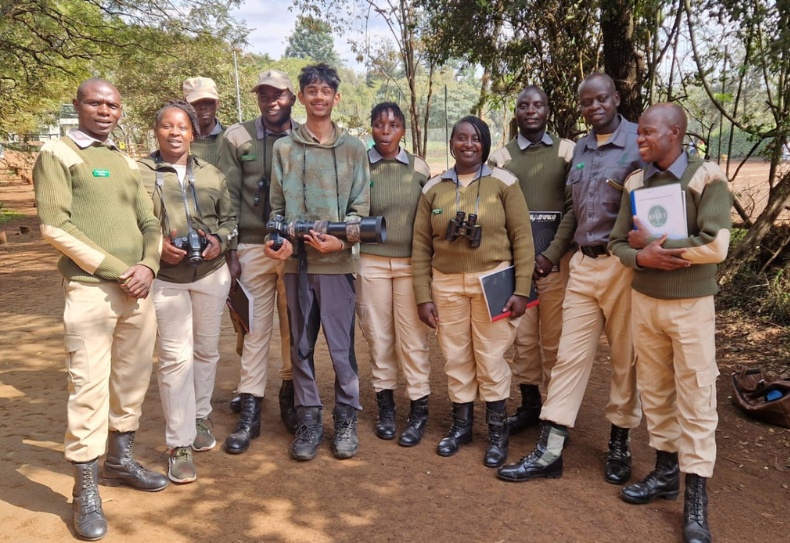
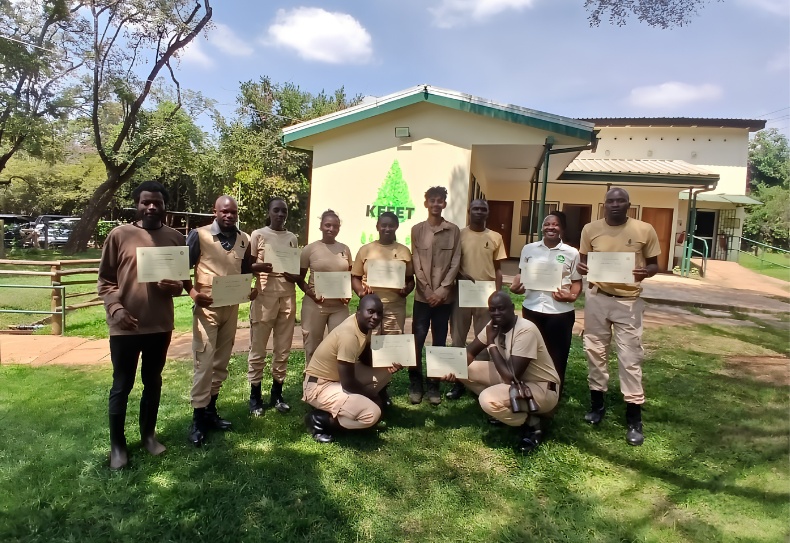
As part of KFEET’s commitment to continuous capacity building, our Education Facilitators participated in an intensive birdwatching training workshop held from 13th to 16th July 2026. The workshop was facilitated by Mr. Adarsh Nagda, a professional bird guide, wildlife photographer, and member of the Nature Kenya Bird Committee.
The training equipped our team with practical bird identification skills and a deeper understanding of bird ecology, behaviour, bird tourism, and the use of citizen science applications such as Merlin Bird ID and eBird. These skills will strengthen our environmental education programmes by enabling facilitators to confidently interpret the rich birdlife of Karura Forest for learners and visitors.
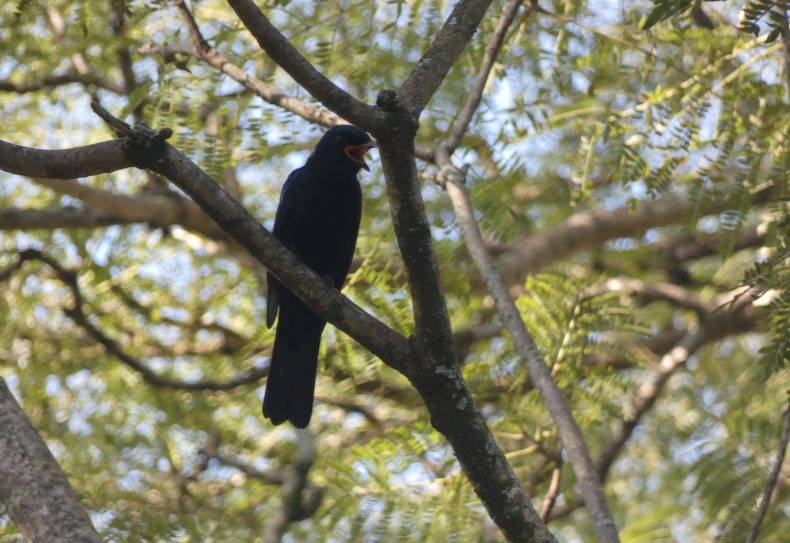
The workshop combined classroom sessions with extensive field practice, making it both practical and engaging. During the first field session, the team recorded 61 bird species, with highlights including the Black Cuckooshrike and the White-headed Barbet. One of the first lessons focused on identifying birds by their families, a fundamental skill in birdwatching. It was exciting to encounter representatives from many different bird families, including sunbirds, weavers, barbets, waterbirds, and raptors.
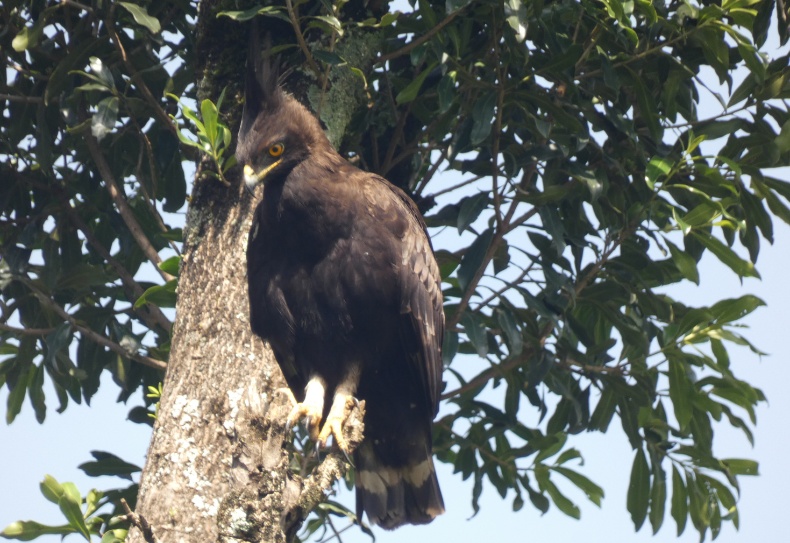
The second day began with an early morning birding walk, where we were rewarded with exceptional views of a Long-crested Eagle. The bird remained perched long enough for the team to study both its front and rear profiles, providing an unforgettable learning opportunity. As we ventured deeper into the forest canopy, the focus shifted to identifying birds by their calls and songs, an essential skill in forest birding. Guided by Adarsh’s expertise, we successfully located the elusive Cabanis’s Greenbul, a species that favours the forest understorey, while its close relative, the Yellow-whiskered Greenbul, announced its presence with its distinctive calls echoing through the forest.
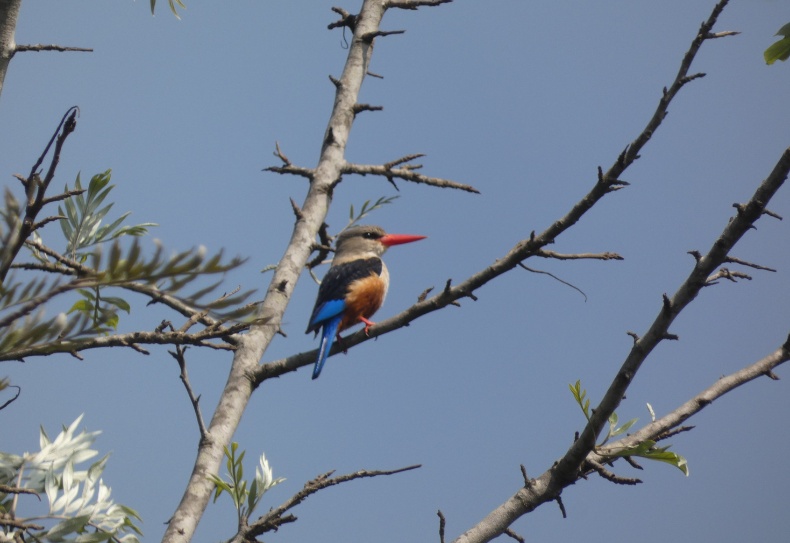
On the third day, we explored deeper sections of Karura Forest in search of some of its most sought-after forest beauties. The team was thrilled to observe the magnificent Narina Trogon, hear Hartlaub’s Turaco announcing its presence from the forest canopy, and spot the Grey-headed Kingfisher and the endemic Kikuyu White-eye. The workshop concluded with an informative session on bird migration before another rewarding walk through the forest, where we recorded remarkable species including the Brown-backed Scrub Robin, Emerald Cuckoo, Brown-chested Alethe, and a Black Sparrowhawk attending its nest. By the end of the four-day workshop, the team had documented an impressive 91 bird species, a testament to both Karura Forest’s rich avian diversity and the dedication of the participants.
This training was more than an opportunity to identify birds; it strengthened our understanding of Karura Forest’s biodiversity and enhanced our ability to deliver richer, more engaging environmental education experiences. By investing in the knowledge and skills of our Education Facilitators, KFEET continues to inspire curiosity, promote conservation, and connect learners with the remarkable birdlife that calls Karura Forest home.
We extend our sincere appreciation to Adarsh Nagda for generously sharing his knowledge, passion, and expertise throughout the training. His mentorship has left a lasting impact on our team, and we look forward to putting these valuable skills into practice as we continue inspiring the next generation of environmental stewards through meaningful environmental education.