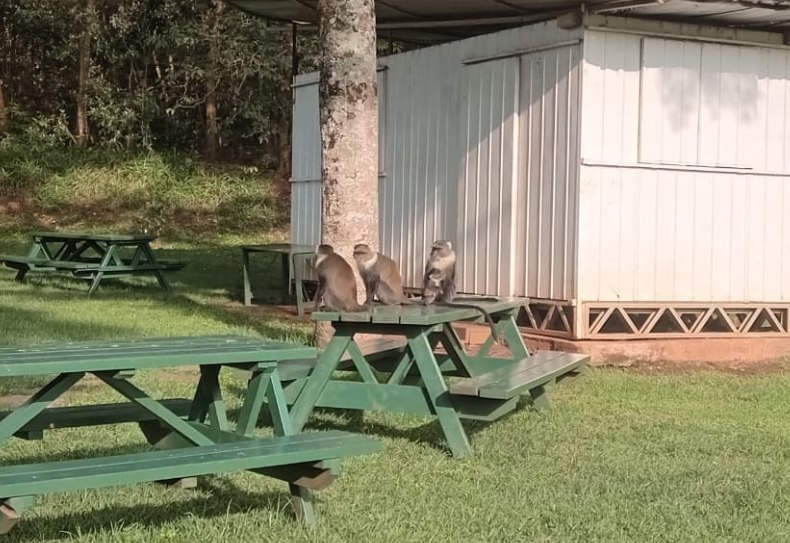
Playful Kolb’s monkeys, also known as Sykes’ monkeys, seem to be having a “face reveal” for their newest family member. Mothers are highly protective of their young, often carrying them on their bellies and allowing them to play only when they feel the environment is safe. They feed on fruits, flowers, and leaves from trees and shrubs, as well as birds’ eggs, invertebrates, and their larvae, which they methodically pluck from loose bark.
After rain, molluscs of various species appear in large numbers amid the forest undergrowth. Most are snails or slugs that feed on the leaves, stems, soft bark, and fruits of forest plants, or on decaying vegetable matter on the forest floor.
This is the Giant African Snail, displaying its beauty at KFEET office block. Snails are prone to desiccation over dry periods therefore they spend much of their lives aestivating within their shells under leaf-falls, where they lay their eggs. Snails provide a rich food-source for many forest creatures, including predatory insects, reptiles, birds, rodents and other mammals.
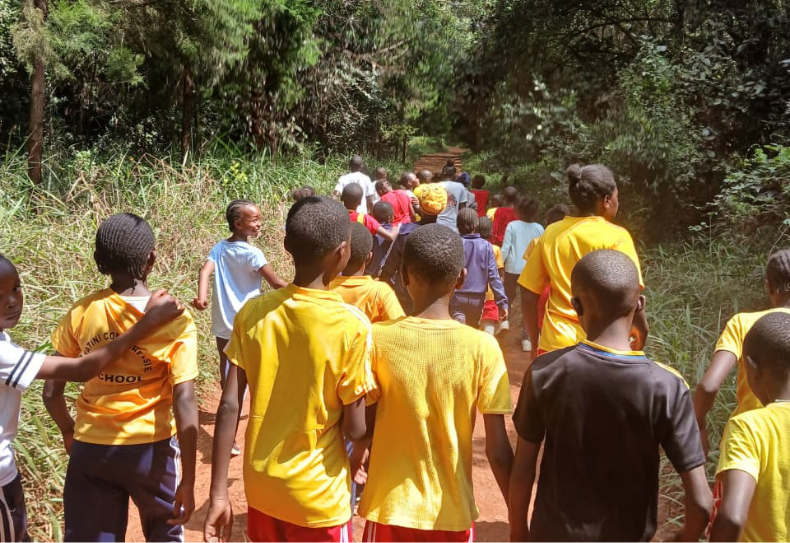
Through KFEET’S education programs, we educate kids on the vital role each animal category plays in the ecosystem.