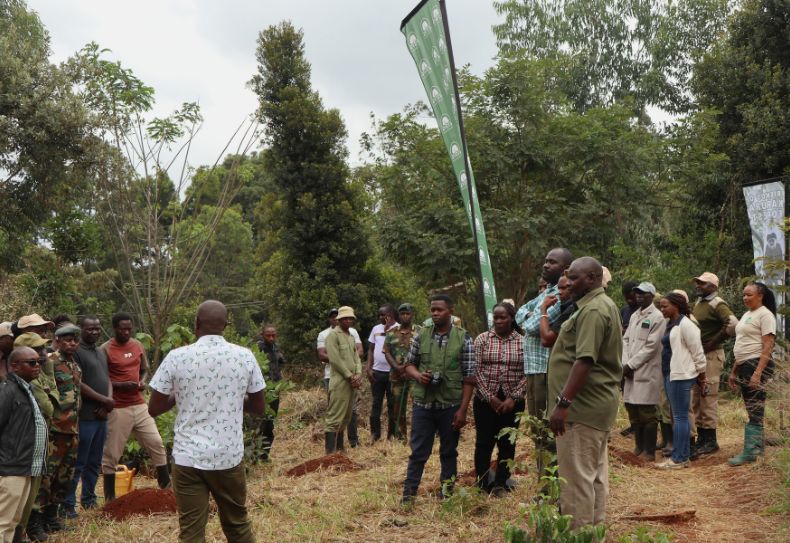
As Kenya prepares to celebrate Mazingira Day on 10 October, the Karura Forest Environmental Education Trust (KFEET) team joined the Kenya Forest Service (KFS) and Friends of Karura Forest (FKF) teams on 8 October 2026 for a day of tree planting and conservation learning.
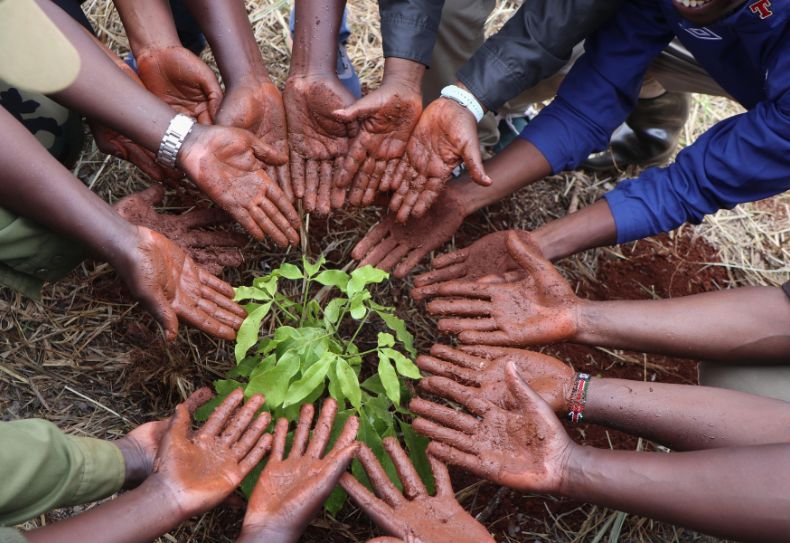
The programme included tree planting, a short guided walk to appreciate restored areas of the forest, a competitive conservation trivia session and commitment pledges on a conservation board.
Mazingira Day is a nationwide celebration, with the main national event scheduled for Saturday, 10 October 2026. However, considering the high number of visitors and traffic experienced at Karura Forest over the weekend, our in-house celebration was held on 8 October, a date that also holds historical significance for Karura Forest. According to Mr Munene, Head of the Karura Forest Ecotourism Station, the late Professor Wangari Maathai was awarded the Nobel Peace Prize on 8 October 2004.
Elly Kogei, FKF Restoration Officer, explained that the restoration team had selected 50 indigenous seedlings for the exercise. Although more seedlings were available and there was sufficient space for planting, the lack of rainfall meant that planting had to be limited to avoid wasting seedlings before favourable conditions returned.
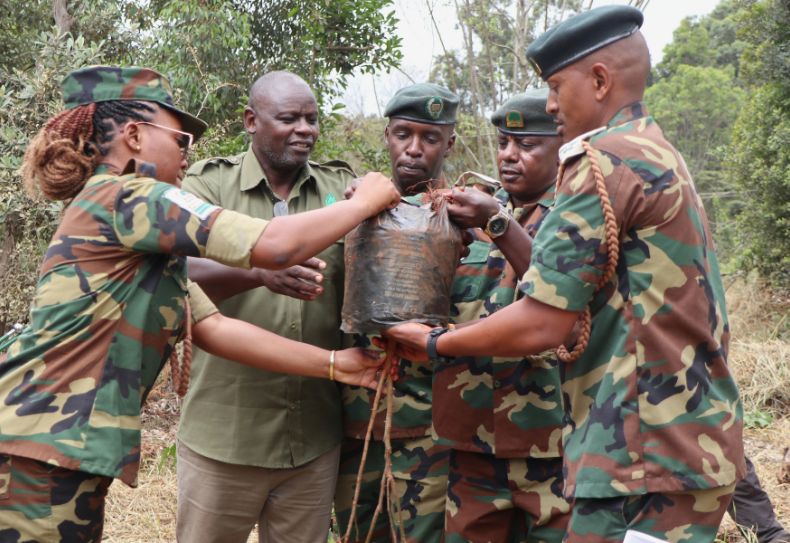
Among the selected seedlings was Bridelia (black sweet berry), a medicinal tree with sweet, edible fruits and fibrous roots. This ceremonial tree was planted by the management team, comprising Mr Munene (KFS), Mr Peter Njui, Operations Manager at FKF, the Forest Station Manager, Inspector Mr Gitonga and Assistant Forester Ms Jean.
The remaining seedlings, including Carissa edulis, Prunus africana, Erythrina abyssinica, Syzygium species, Albizia species, Croton megalocarpus, Cape chestnut, Vepris glandulosa, Afrocanthium keniense and Ludia species, were distributed among five groups, with each group planting 10 seedlings.
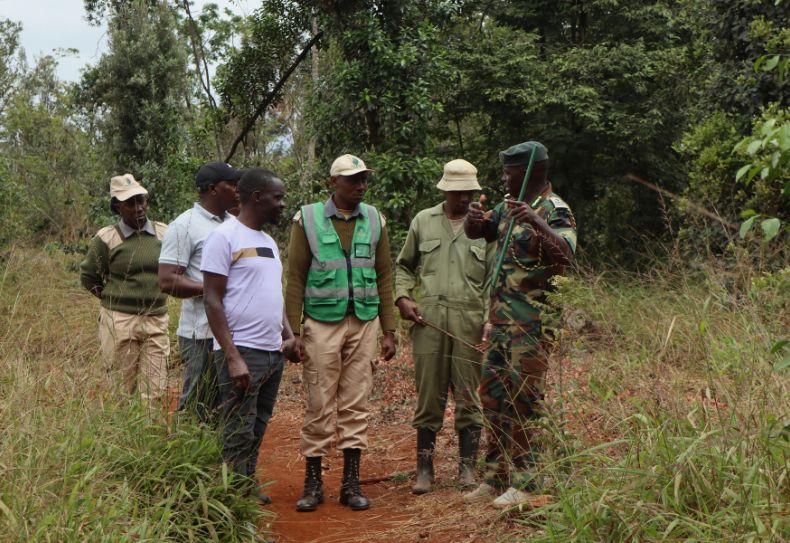
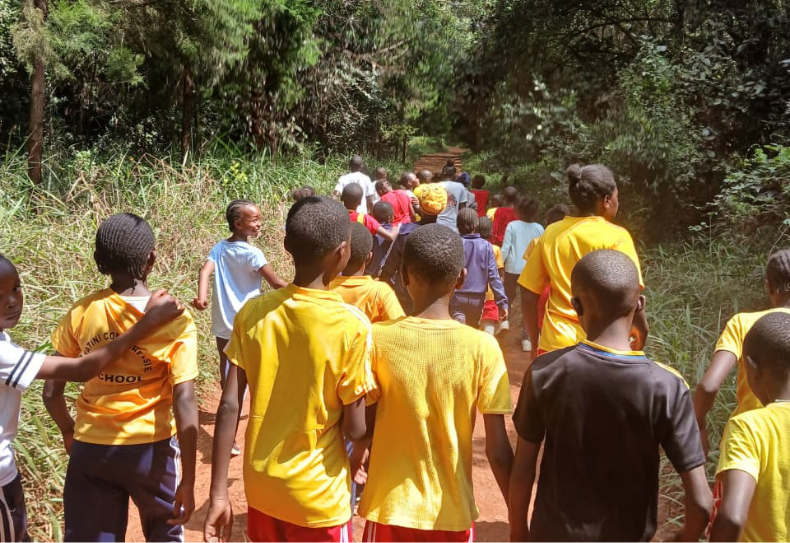
Following the tree-planting exercise, participants embarked on a short guided walk to appreciate recently restored sections and other restoration sites within the forest.
During the walk, Mr Munene highlighted the importance of considering the landscape and existing tree populations when planning forest restoration. This includes studying mature trees, understanding genetic diversity and avoiding excessive reliance on a single species. Planting a variety of indigenous species helps reduce the risk of losing large numbers of trees if a disease outbreak affects a particular species.
The discussion also explored the political, economic and social dimensions of forestry. Mr Munene emphasised that forests are a long-term investment and that successful conservation requires an understanding of the needs and interests of surrounding communities.
Social forestry, in particular, involves engaging communities that depend on forests for various resources and respecting their cultural values. During dry seasons, for example, livestock keepers may depend on forest grass as a last resort. Understanding such needs and engaging communities constructively can help reduce conflict and prevent destructive practices, including forest fires. Similarly, sacred sites such as shrines and caves must be approached with respect for the cultural beliefs of neighbouring communities and their elders.
The team also learnt about the role of the current breeding seed orchard at Amani Nursery in supporting restoration efforts. Seed orchards bring together seeds from different sources in a controlled setting, providing opportunities for research and supporting the long-term availability of seedlings. The selection of tree species must also consider the conditions of each restoration site. In waterlogged areas, for instance, species that tolerate wet conditions are more suitable. While eucalyptus can absorb substantial amounts of water, careful consideration must be given to its effects on aquatic fauna and small mammals that depend on these areas as drinking points. Selecting appropriate indigenous species remains an important part of restoring healthy forest ecosystems.
These lessons reinforced the understanding that forest rehabilitation is a long-term undertaking that requires scientific knowledge, careful planning and collaboration.
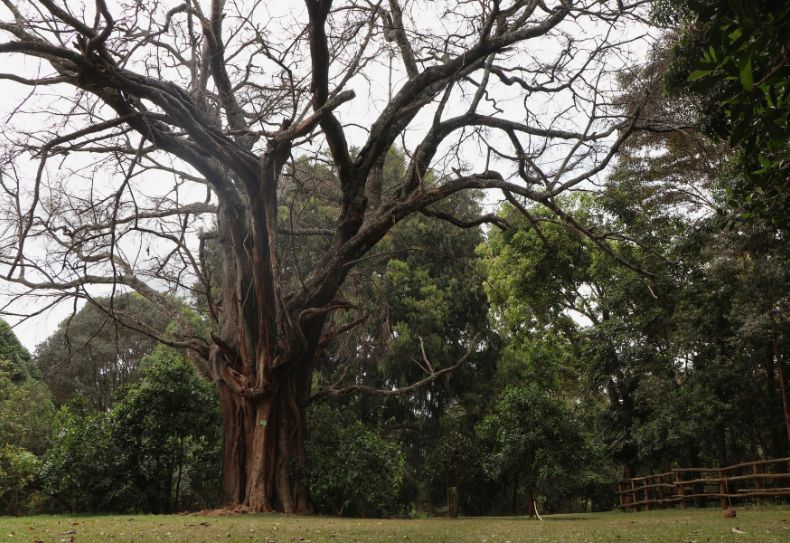
The guided walk concluded at Amani Gardens, where participants learnt about the history and cultural significance of its magnificent Mugumo tree.
The Mugumo is a sacred and ceremonial tree among the Kikuyu community. The iconic tree has now dried up. However, according to Kikuyu cultural beliefs, the Mugumo should not be felled, highlighting the importance of respecting cultural heritage in forest management.
The learning continued with a lively and competitive conservation trivia session. Questions covered a range of topics, from identifying the tree species planted by each group to the history of Karura Forest and current affairs. Participants put their knowledge to the test, and prizes were awarded to the winning teams.
To conclude the day’s activities, participants made personal commitments to forest conservation by recording their pledges on a commitment board, reaffirming their shared responsibility to protect and restore Karura Forest.
The celebration provided an opportunity to learn, reflect on the progress made in forest restoration and strengthen collaboration among the teams working to conserve this important urban forest. It was also a reminder that successful restoration goes beyond planting trees; it requires scientific understanding, community engagement, respect for cultural heritage and a long-term commitment to nurturing the forest.