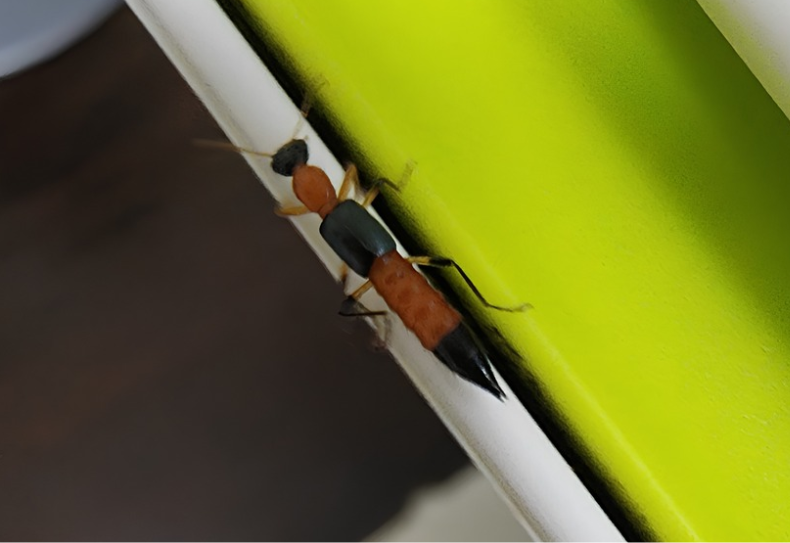
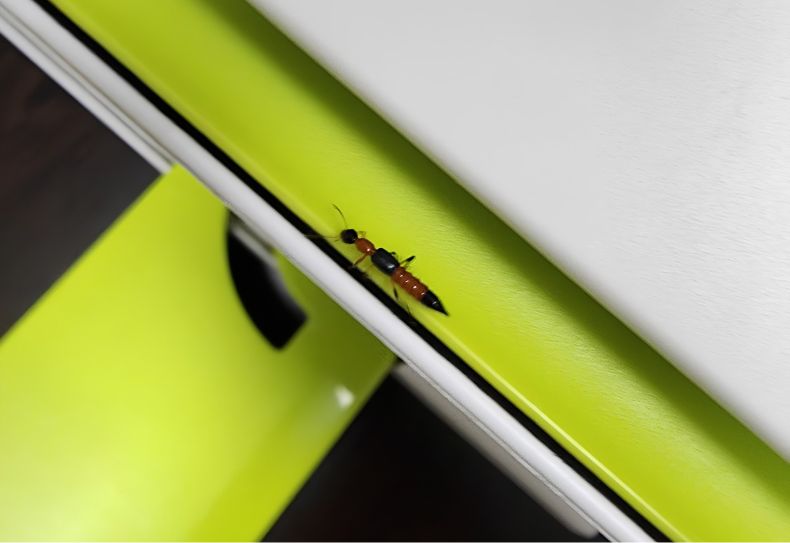
Spotted a little orange-and-black insect around your home lately? Before you try to handle it, take a closer look!
With a few of these unwelcome visitors making an appearance recently, it is worth knowing a little more about the notorious Nairobi fly and how to avoid its unpleasant effects.
First, a quick clarification: the Nairobi fly is the insect, while Nairobi eye is the condition that can occur when its toxin gets into or around the eyes.
Meet the Nairobi fly
Despite its name, the Nairobi fly is not actually a fly. It is a small rove beetle belonging to the genus Paederus, recognisable by its slender body and distinctive orange-and-black colouring.
These beetles are commonly found in moist environments, where they feed on other small insects. In fact, they play a useful role in the ecosystem by helping to control insect pests.
But herein lies the problem: The beetle contains a potent toxin called pederin, which can cause painful skin irritation and blistering when it comes into contact with the skin. The beetle does not bite or sting. The injury usually happens when it is crushed or smeared against the skin.
Where does “Nairobi Eye” come from?
When the toxin comes into contact with any part of your skin, it can cause a condition known as Paederus dermatitis. Symptoms may include redness, burning, itching and blisters, sometimes appearing a day or two after contact.
If the toxin is transferred to the eyes, often by rubbing them with contaminated fingers, it can cause severe irritation and inflammation known as “Nairobi Eye”. Eye involvement can be serious and may affect vision, so it is important to seek prompt medical attention.
Why are they appearing now?
Nairobi flies thrive in moist conditions, and their numbers can increase dramatically following periods of heavy rainfall. They are also attracted to artificial lights, which can draw them towards homes and other buildings at night.
Although associated with Nairobi, these beetles are found in many other parts of Africa and the world.
How do you protect yourself?
The good news is that a few simple precautions can help prevent an unpleasant encounter. Here are some “Dos and Don’ts”
Don’t squash it! If one lands on your skin, gently blow it away or brush it off without crushing it.
Wash immediately. If you suspect contact with the beetle or its body fluids, wash the affected skin thoroughly with soap and water.
Keep them outside. Use window screens where possible, close doors and windows at night, and draw curtains to reduce the attraction of indoor lighting.
Keep your hands away from your eyes. Wash your hands after handling or removing an insect.
Seek medical advice. If a rash or blistering develops, consult a healthcare professional. If the eyes are affected, rinse them immediately with plenty of clean water and seek urgent medical care.
A little insect awareness goes a long way…The Nairobi fly is a useful reminder that even the smallest creatures can have a significant impact on our lives. These beetles are part of the natural world and help control other insects, but understanding their behaviour helps us coexist with them safely.
Remember, if you see one, don’t squash it. Brush it away or blow it away gently, wash your hands, and keep your eyes safe!